
In a lightly used car the oil degrades before the mileage is reached; stop-start city driving wears it as much as a long trip. Fixed service intervals, "long life" servicing, the short-trip effect and oil analysis.
"How many kilometres before an oil change?" has no single answer, because distance is not the only thing that ages oil. Oil degrades from soot and acid produced by combustion, from fuel and water dilution, from high temperature and from additive depletion. These depend on how and where the car is used. So the right question is not "how many km?" but "how is this car driven?"
Mileage or time?
The service book usually says "15,000 km or 1 year, whichever comes first". In a car doing 6,000 km a year the oil reaches the time limit before the mileage: the additives oxidise, condensation water builds up and the acid number rises. That is why the "1 year" limit exists, and it is the limit to use on low-mileage cars.
Why short trips wear the oil
If the engine is stopped before it is fully warm (before the oil reaches ~90 °C), water vapour and fuel from combustion condense and stay in the oil. Water combines with oil to form sludge; fuel thins the oil and lowers its film strength. City trips of 10–15 minutes are far harder on the oil than the same distance on the motorway. Makers count this as "severe service" and halve the interval.
"Long life" service intervals
On some cars the extended service interval, up to 30,000 km, varies with the remaining oil life the car calculates and is valid only with the special oil defined for that car (e.g. ACEA C3 with VW 504.00/507.00, MB 229.51/229.52). If a standard oil is used the interval must be shortened. On cars that mostly do short trips the extended interval is not used anyway; the car senses this and brings the service forward.
Deciding for a fleet: oil analysis
In commercial vehicle and machine fleets the interval is set by oil analysis, not by estimate. The sample is measured for viscosity, TBN (remaining base reserve), fuel and water dilution, soot and wear metals (iron, copper, aluminium). This avoids both wasting oil by changing early and wearing the engine by changing late, and saves significantly across a large fleet.
In short
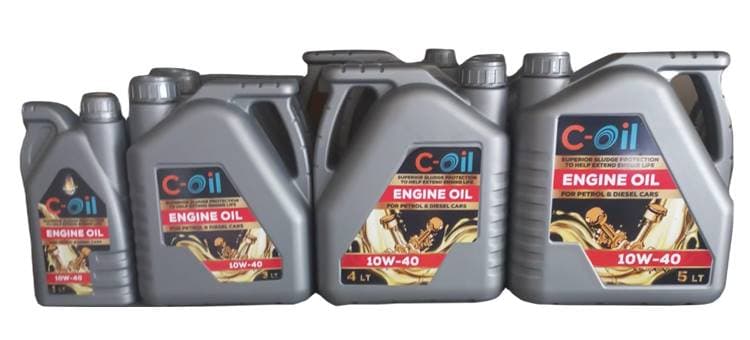
The time to change oil is set by whichever is most limiting: mileage, elapsed time or the type of use. Once a year on a low-mileage car; the maker's "severe service" interval on a car that mostly does short trips; oil analysis for a fleet. C-Oil engine oils are produced at current API/ACEA levels with extended-service approvals; we can work out the right oil and interval for your use together.